
RUTLAND

MILLS
Rutland Mills, from mill complex to creative destination
History on this page draws on research by Lorraine Simpson for Wakefield Historical Society (2023).
PHOENIX MILL
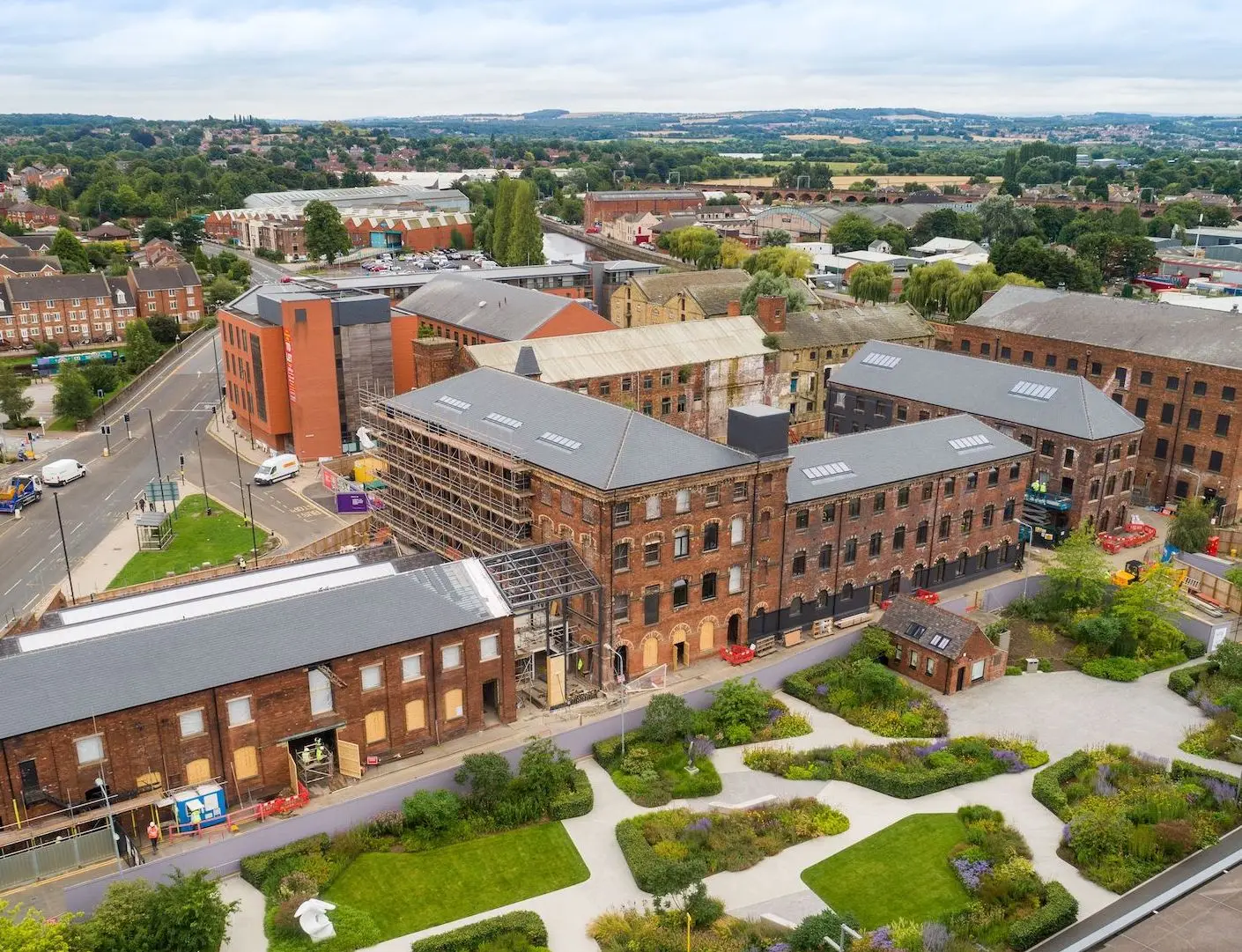
The oldest building on the site. Corn miller Richard Gill opened his "great steam powered stone built mill" in 1796. By 1865 the mills could crush 12,000 bushels of grain a week, "amongst the largest in England" according to the Wakefield Free Press.
A building through time
1761
The Fall Ings Cut opens, making the River Calder navigable upstream of Wakefield.
1794–96
Corn miller Richard Gill builds Phoenix Mill, the oldest building on the site, and opens it in 1796.
1859
Phoenix Mill is auctioned at the Corn Exchange. The listing describes twin 30hp engines by Whitham's of Leeds, 22 pairs of French millstones and stabling for 15 horses.
1863
A boiler explosion at the corn mill claims four lives, including 12-year-old John Firth. The inquest jury urges regular boiler inspection.
1872–75
Rutland Mills is built for Isaac Briggs as an integrated worsted spinning mill, designed by architect John Shaw. Briggs moved here from Westgate when his old site was taken for Westgate Station.
1876
Briggs buys Phoenix Mill and renames it Gradient Mills.
1920
After Isaac Briggs's death, Rutland Mills is sold to J.J. Baldwin & Partners, which merges with John Paton of Alloa that year to form Patons & Baldwins, one of the world's largest hand knitting yarn makers.
1945
Closure is announced to centralise production in Darlington, then reversed, with upgrades following in 1956.
1970
Patons & Baldwins finally closes the business, ending the mills' part in Wakefield's textile industry.
1990s
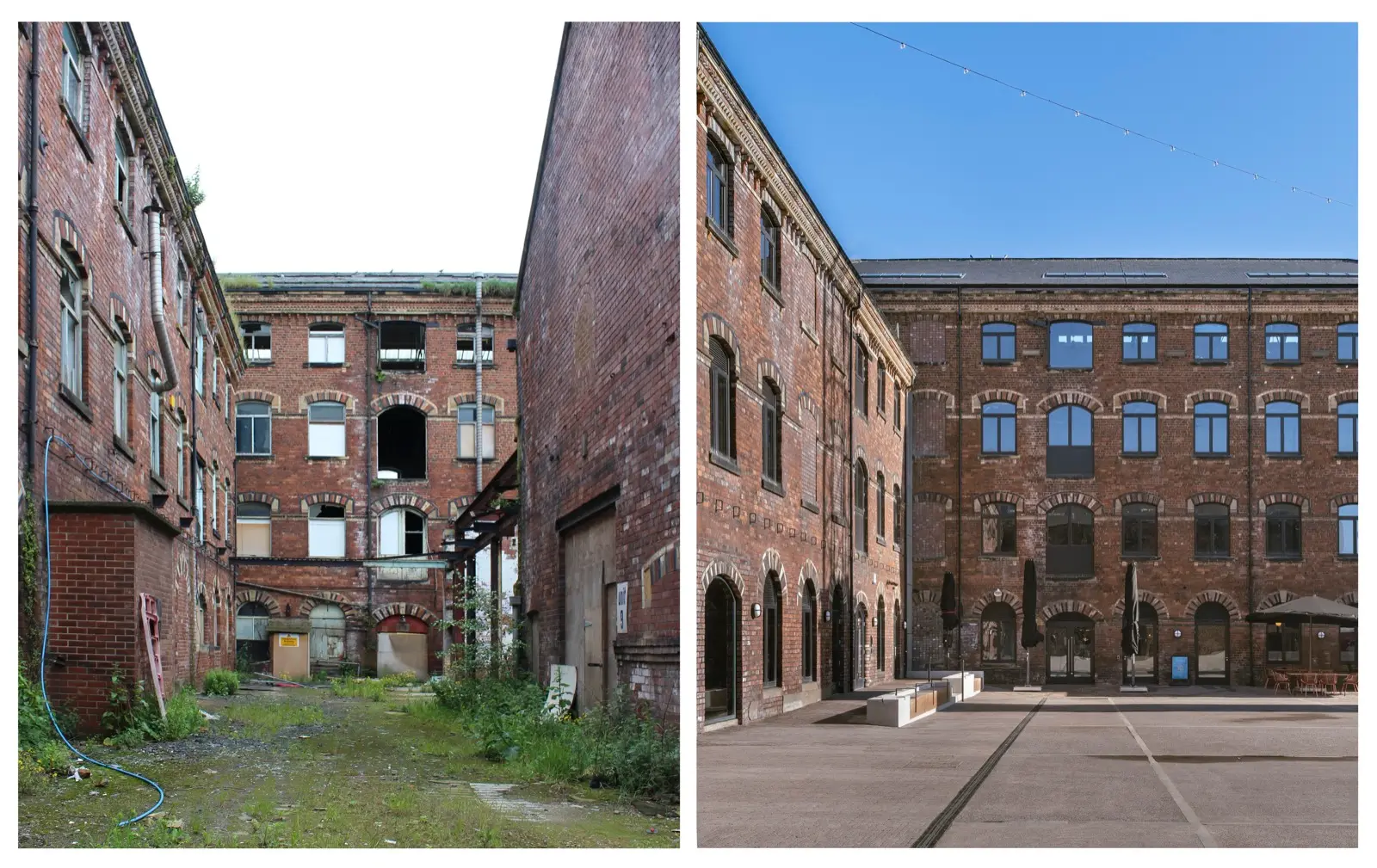
Staff and students from Wakefield College set up Rutland Studios on the top floor (1991), followed by the Wakefield ArtsMill studios and gallery (1997). The buildings later stand derelict for around 20 years.
2019
City & Provincial Properties acquires the site, working with Tileyard and Wakefield Council.
2022
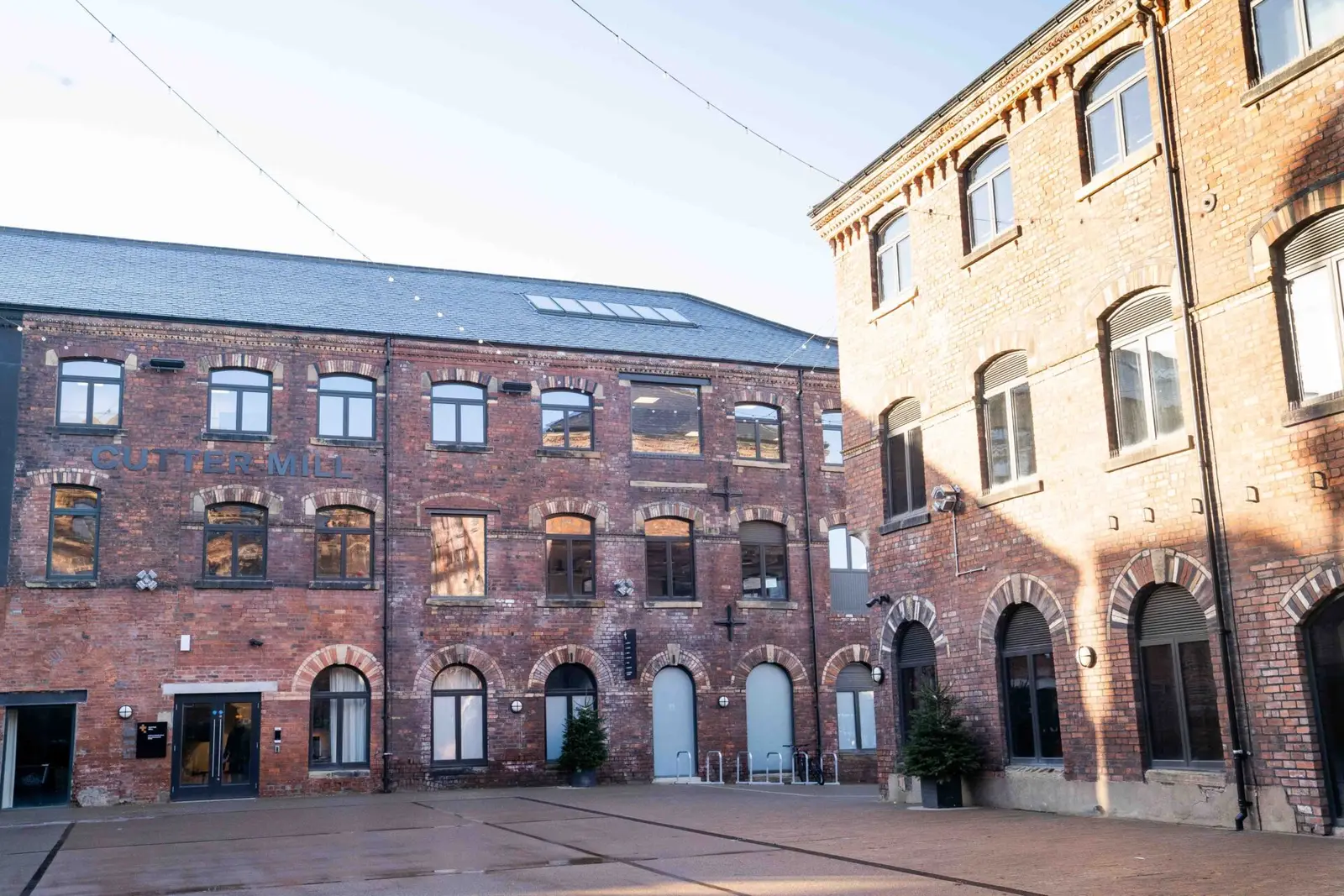
Phase 1 opens, bringing the Cutter, Cotton and Corn Mills and the Carding Shed back into use.
2024
Gradient Mill, a new Grade A building, is handed over.
2025
The Phoenix Mill refurbishment completes.
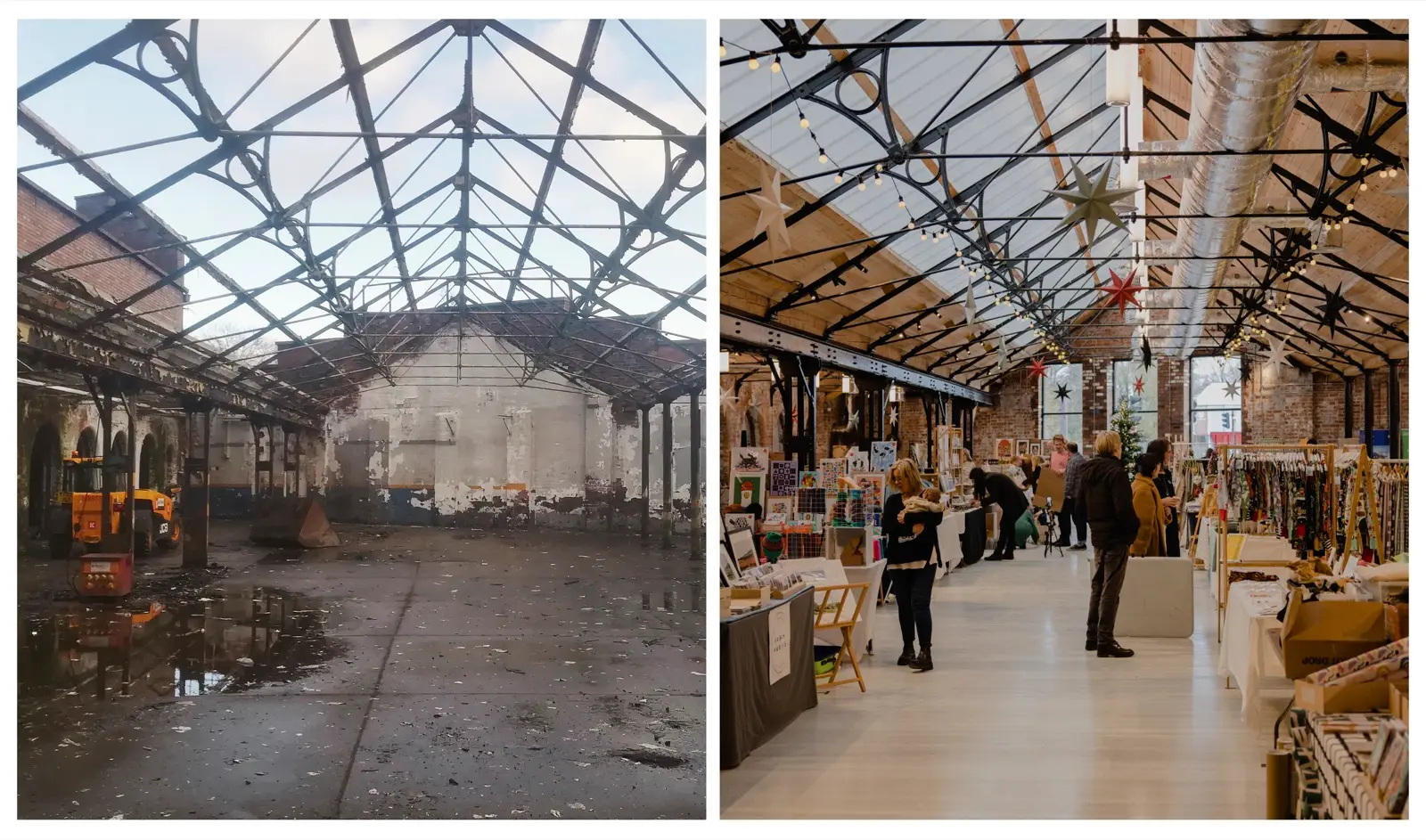
Before and after
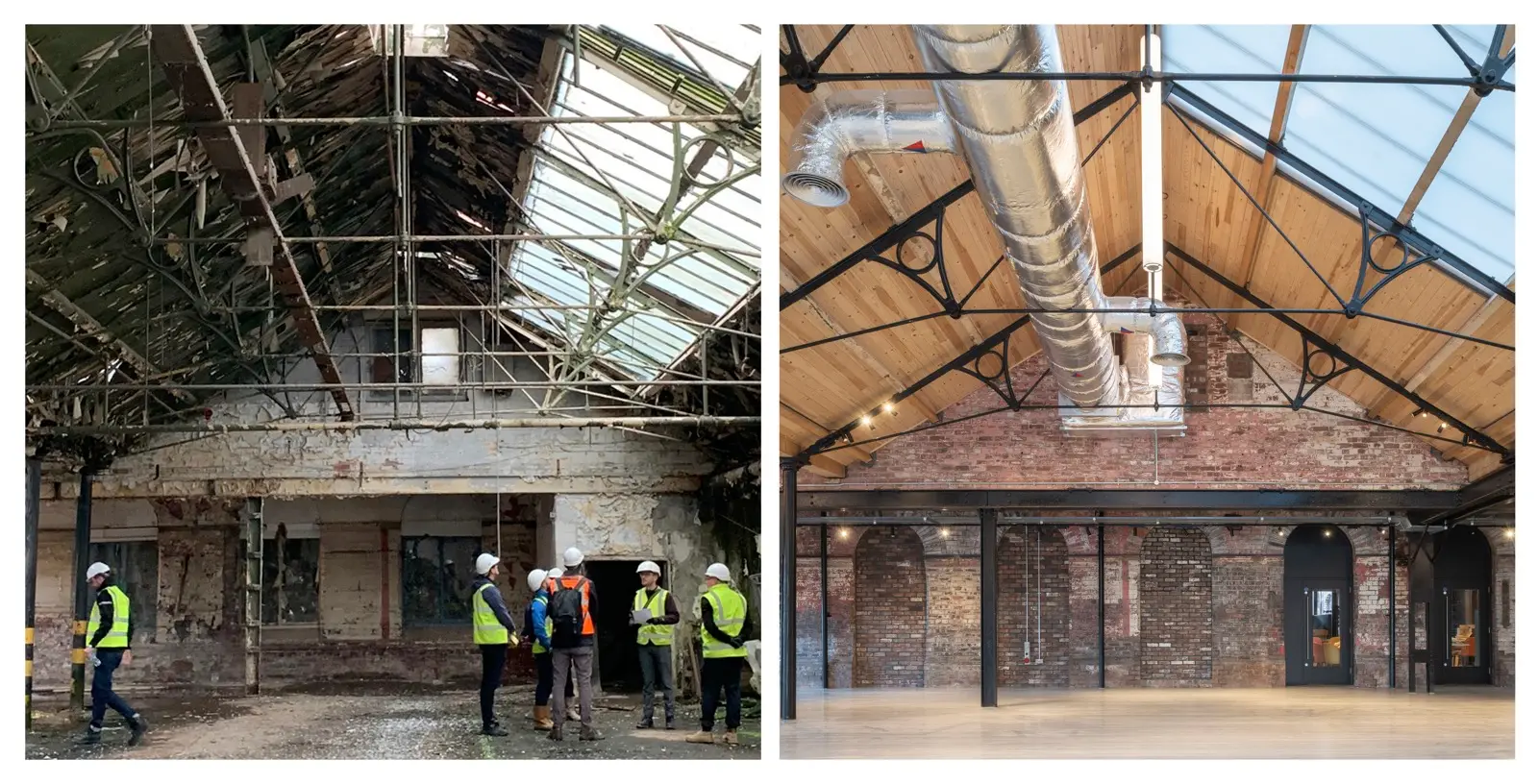
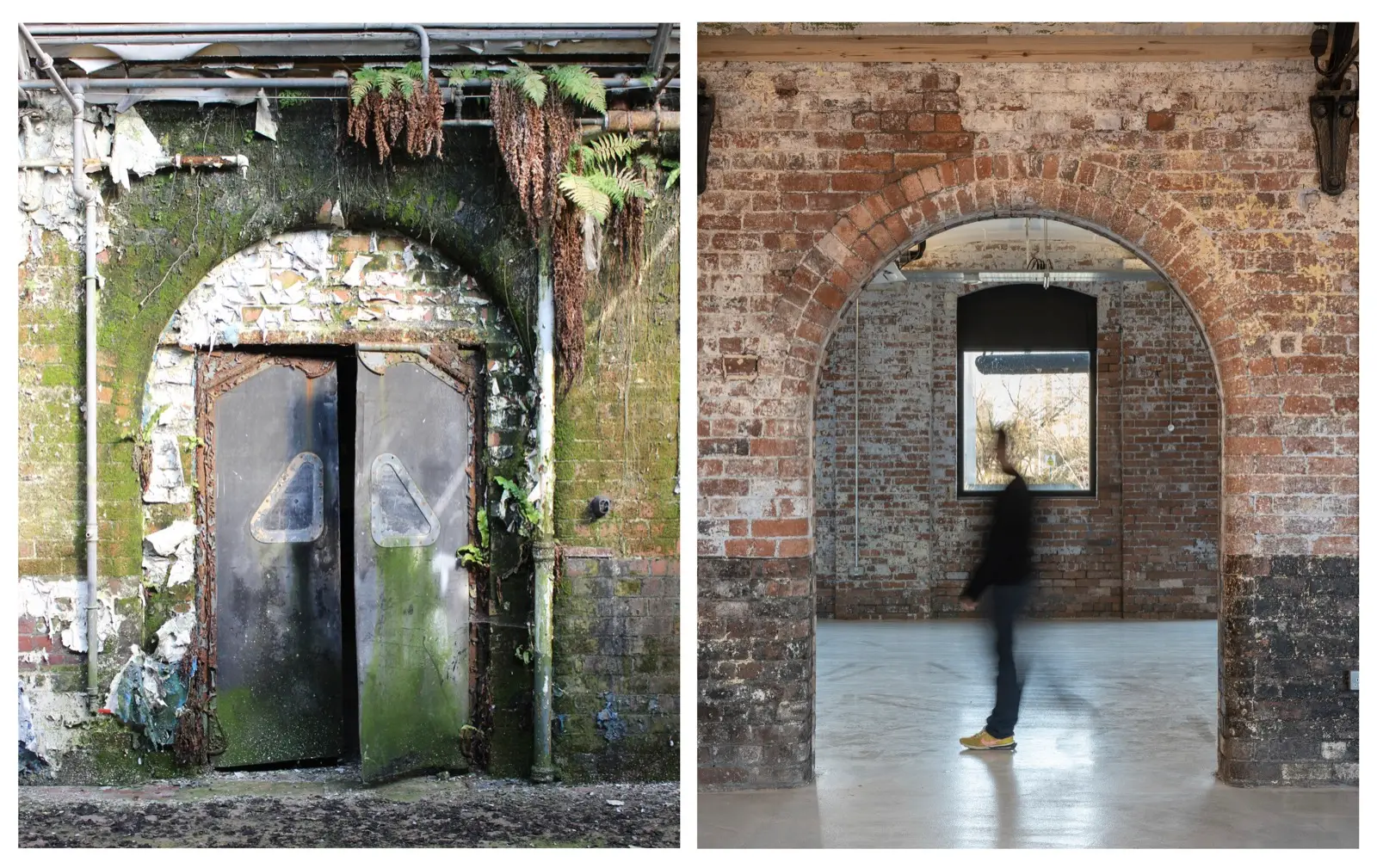
During the restoration
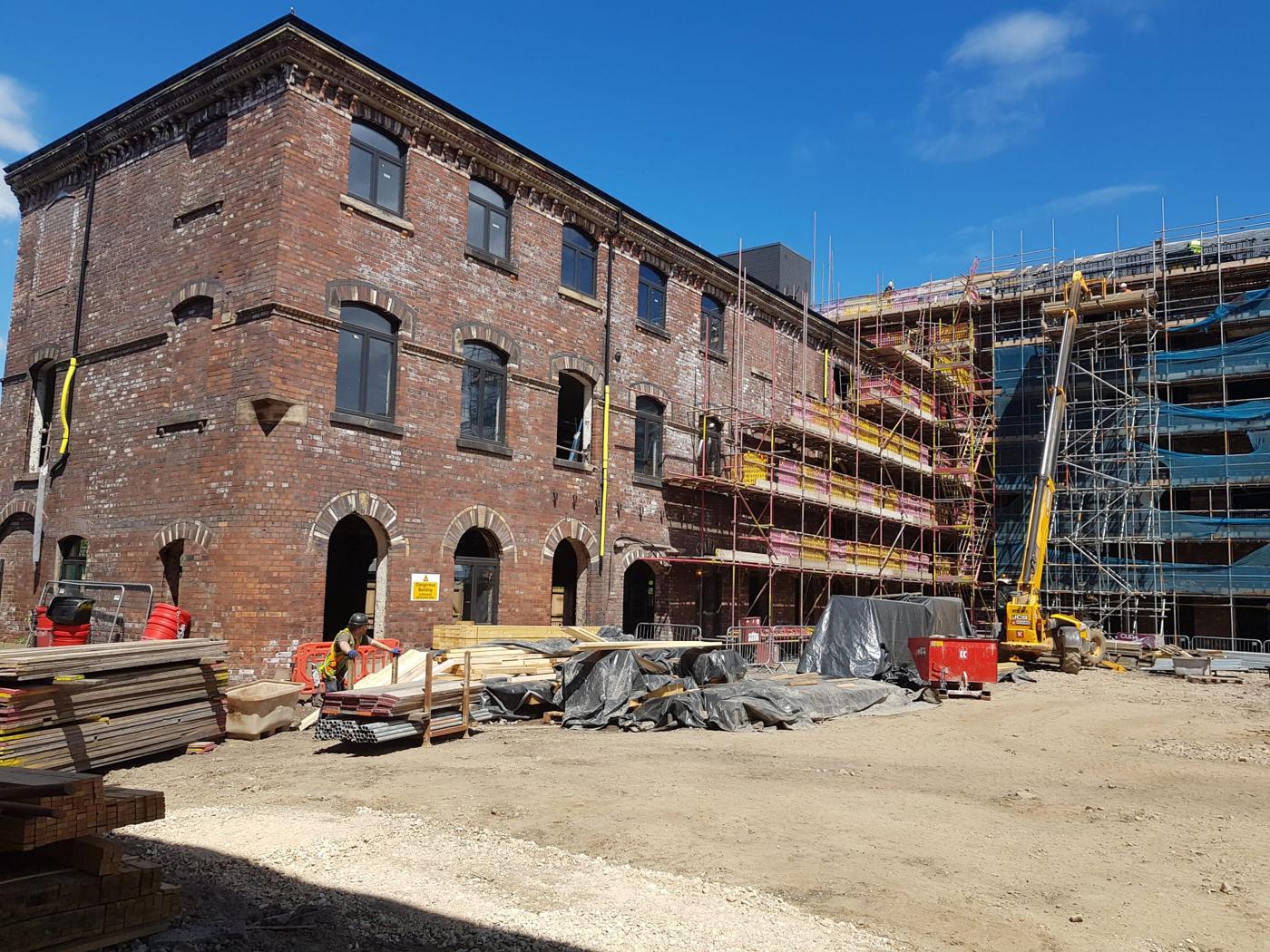
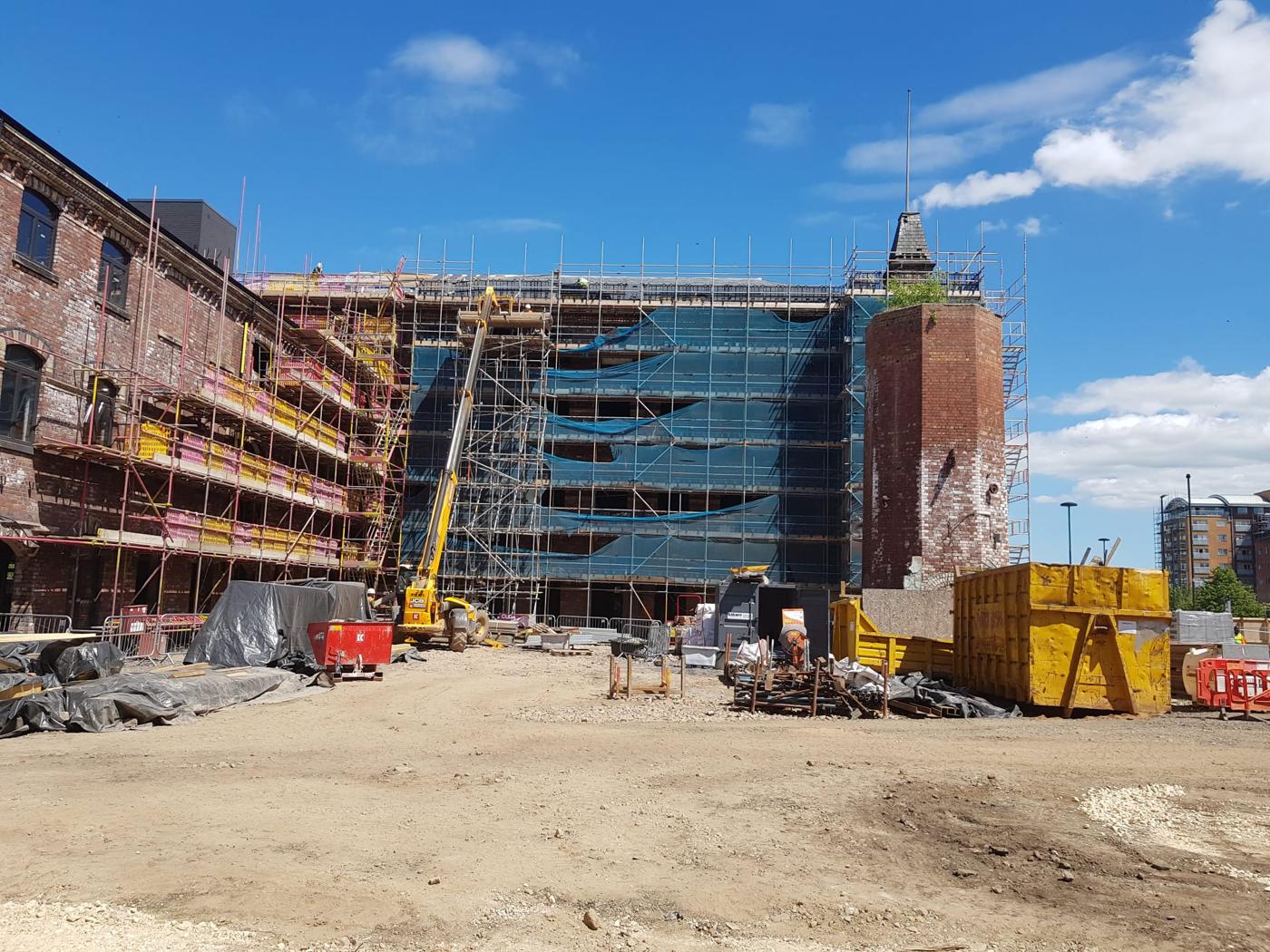
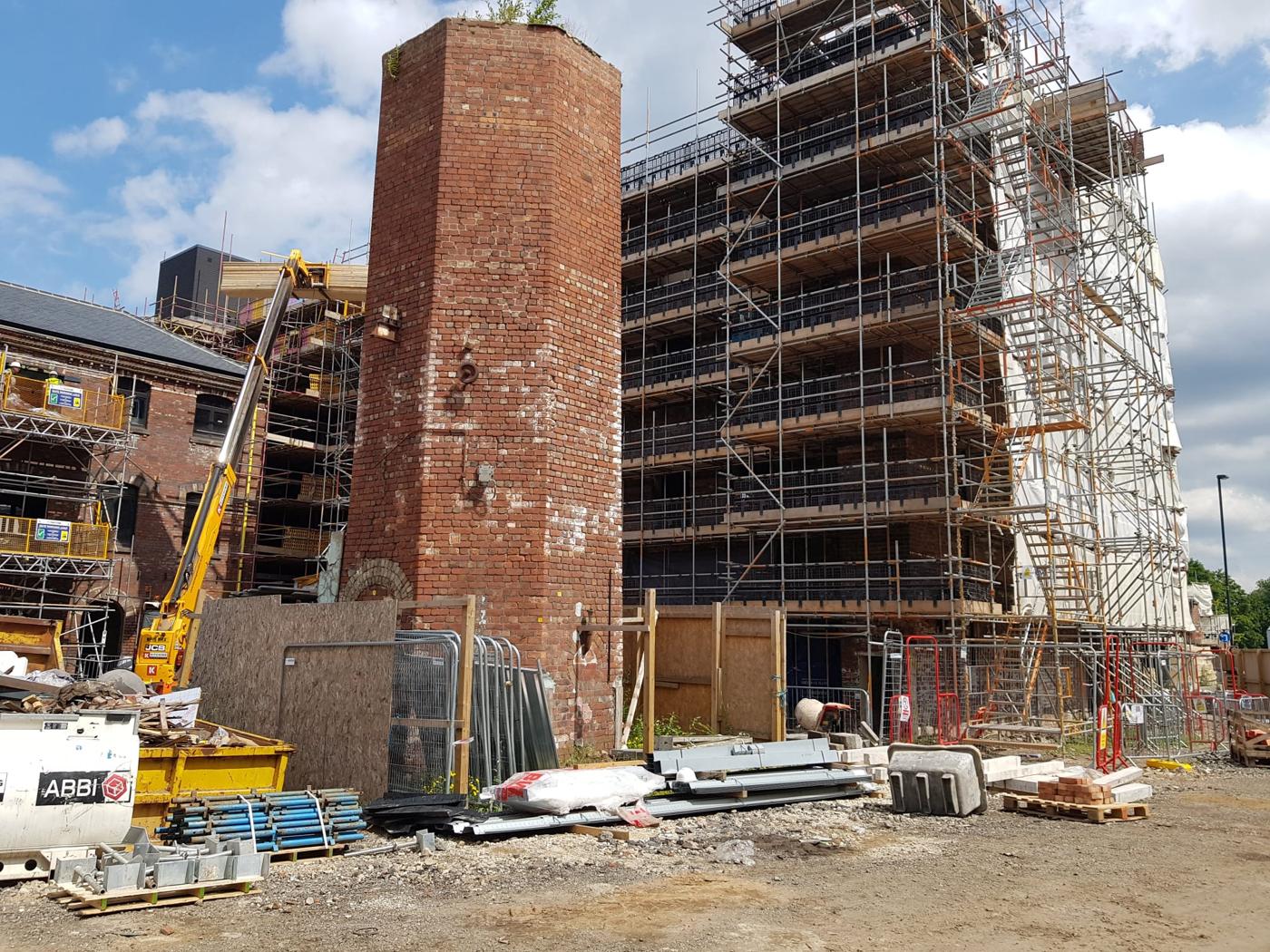
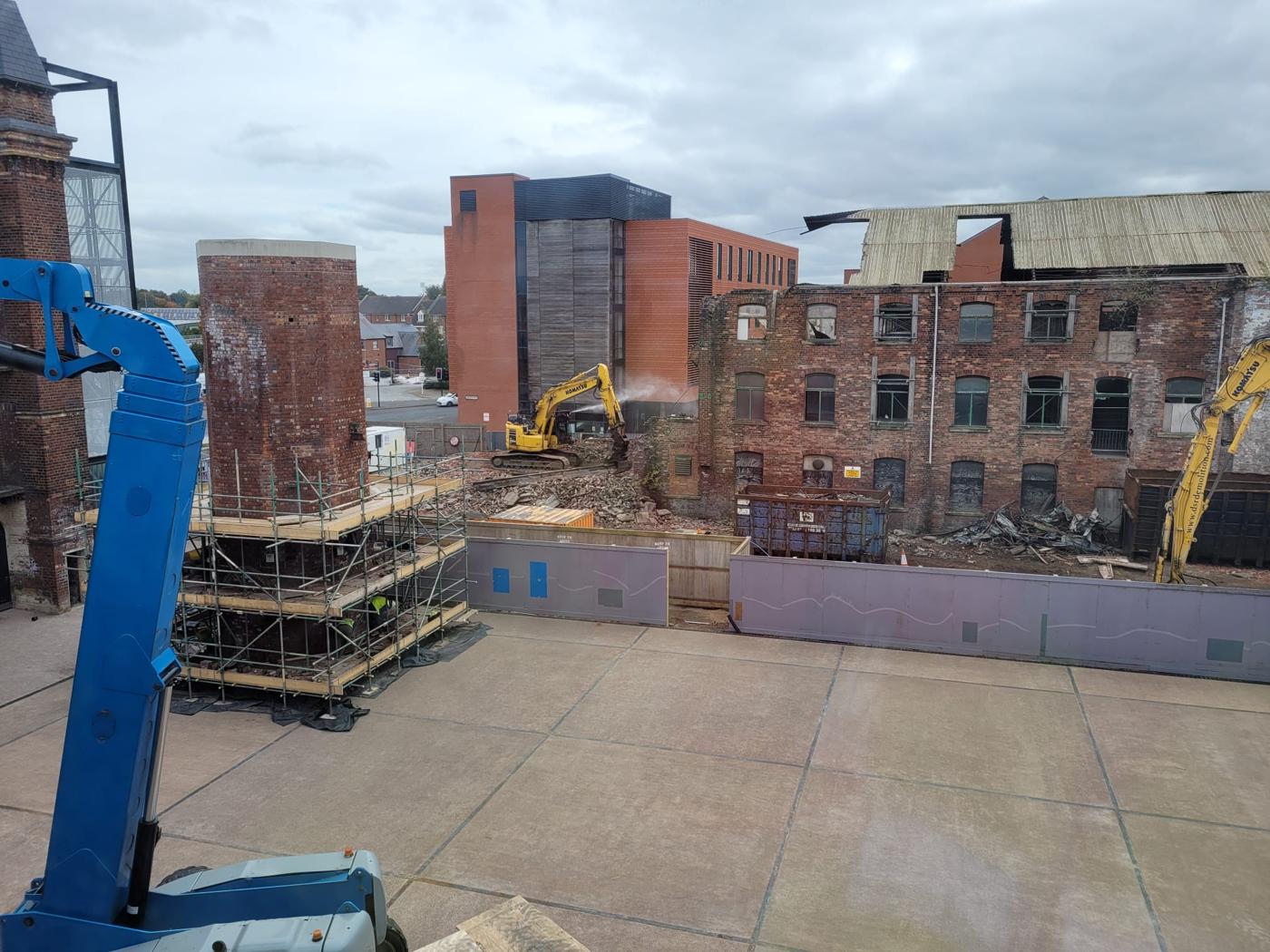
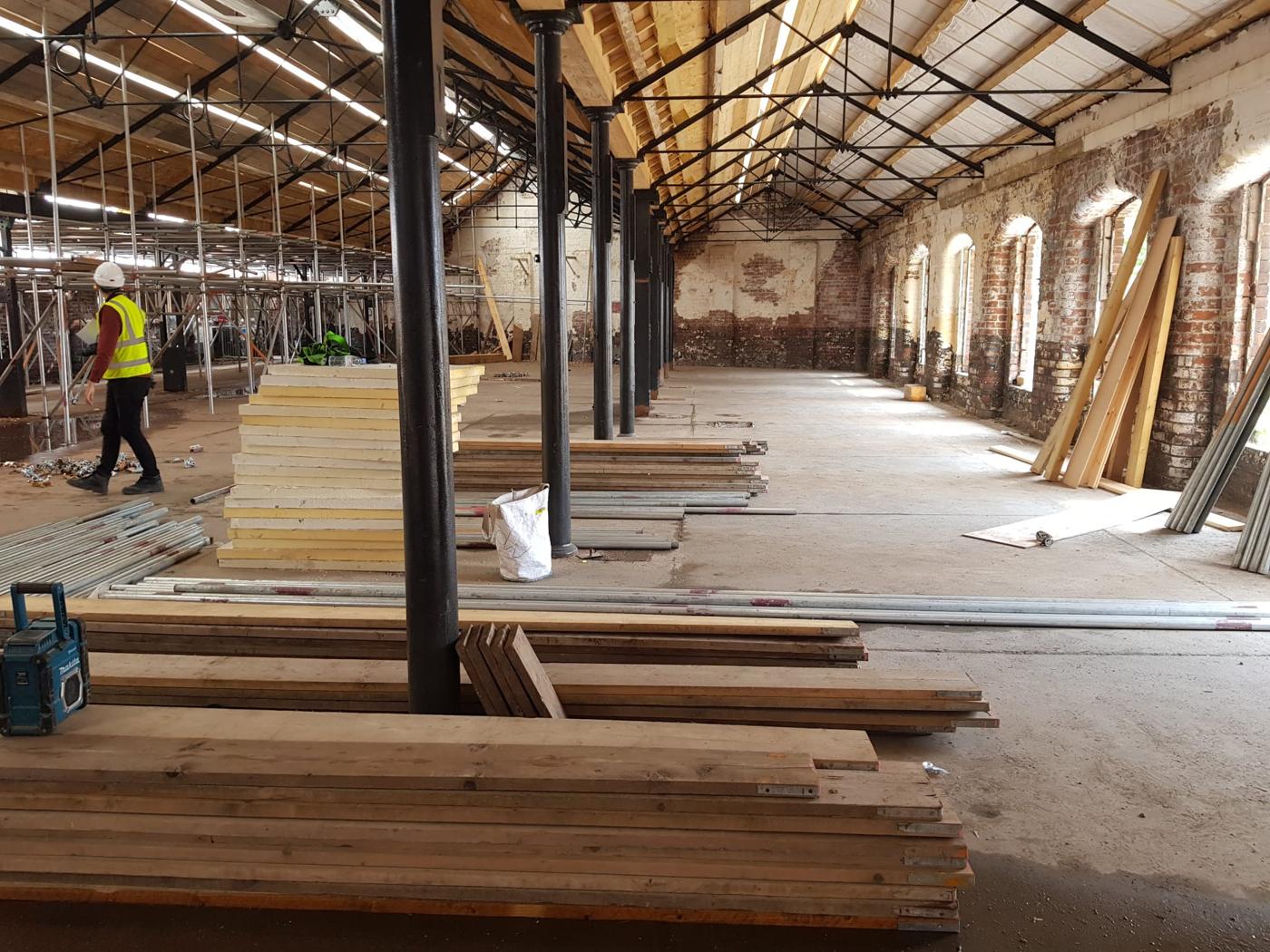
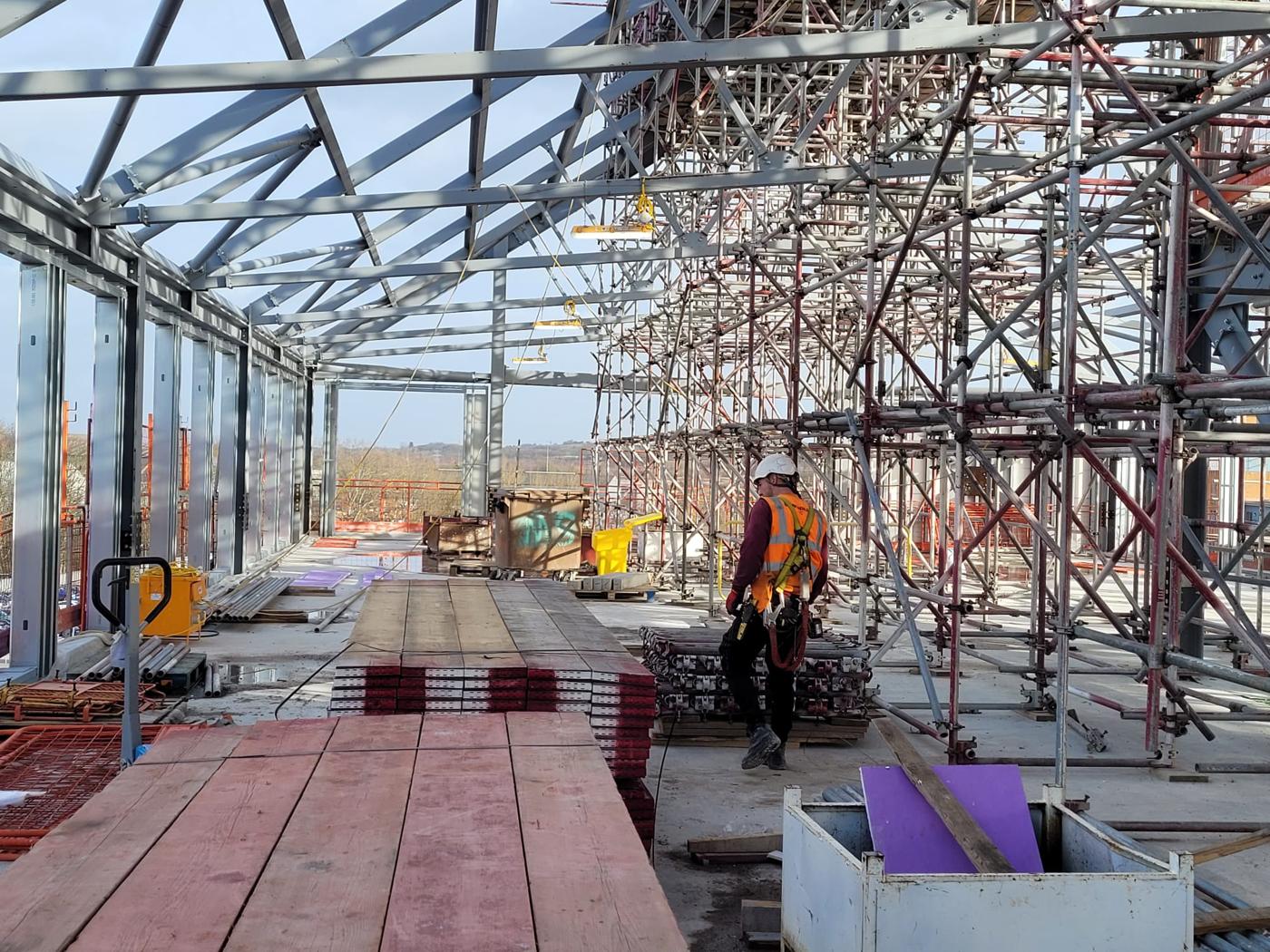
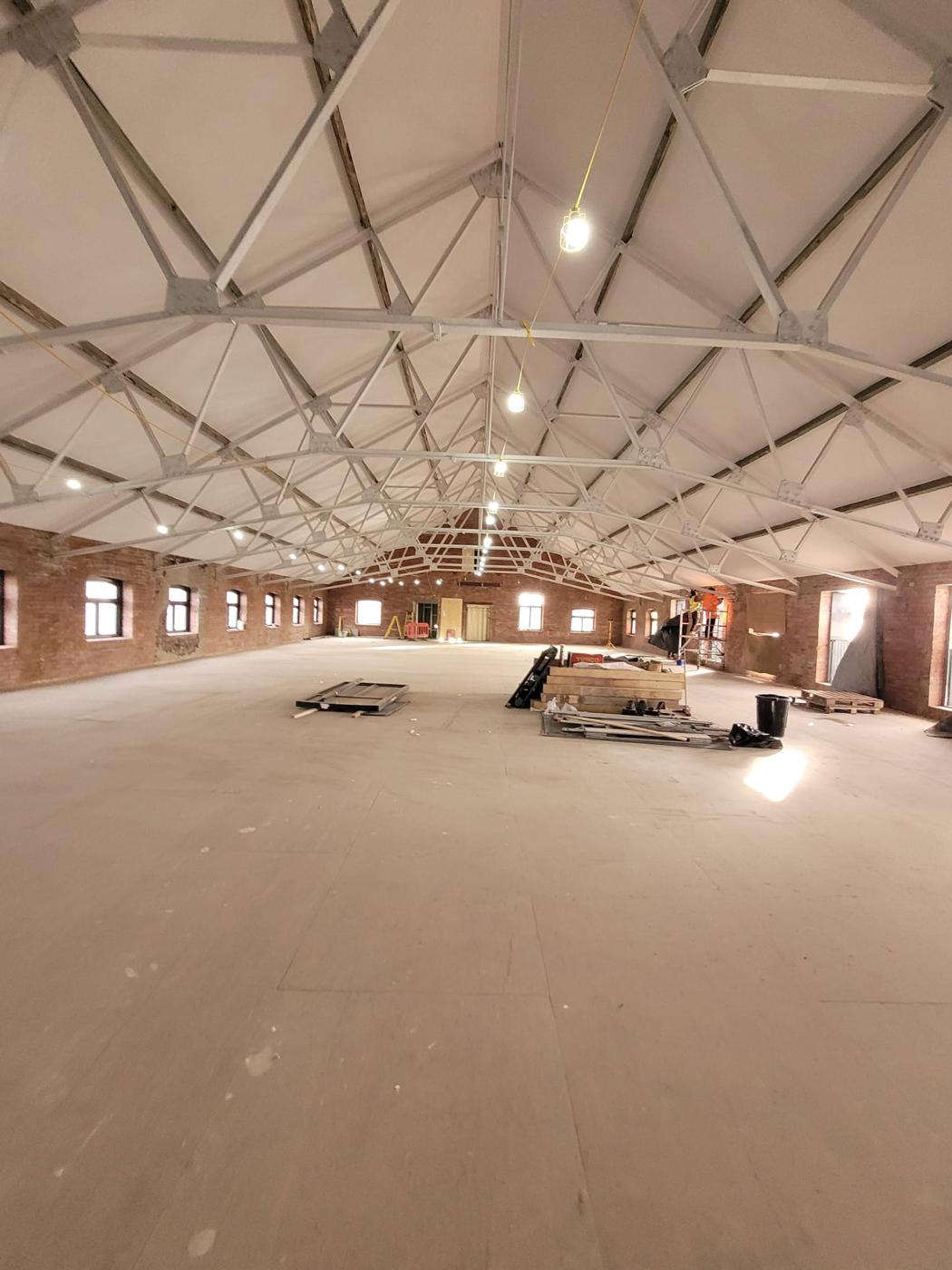
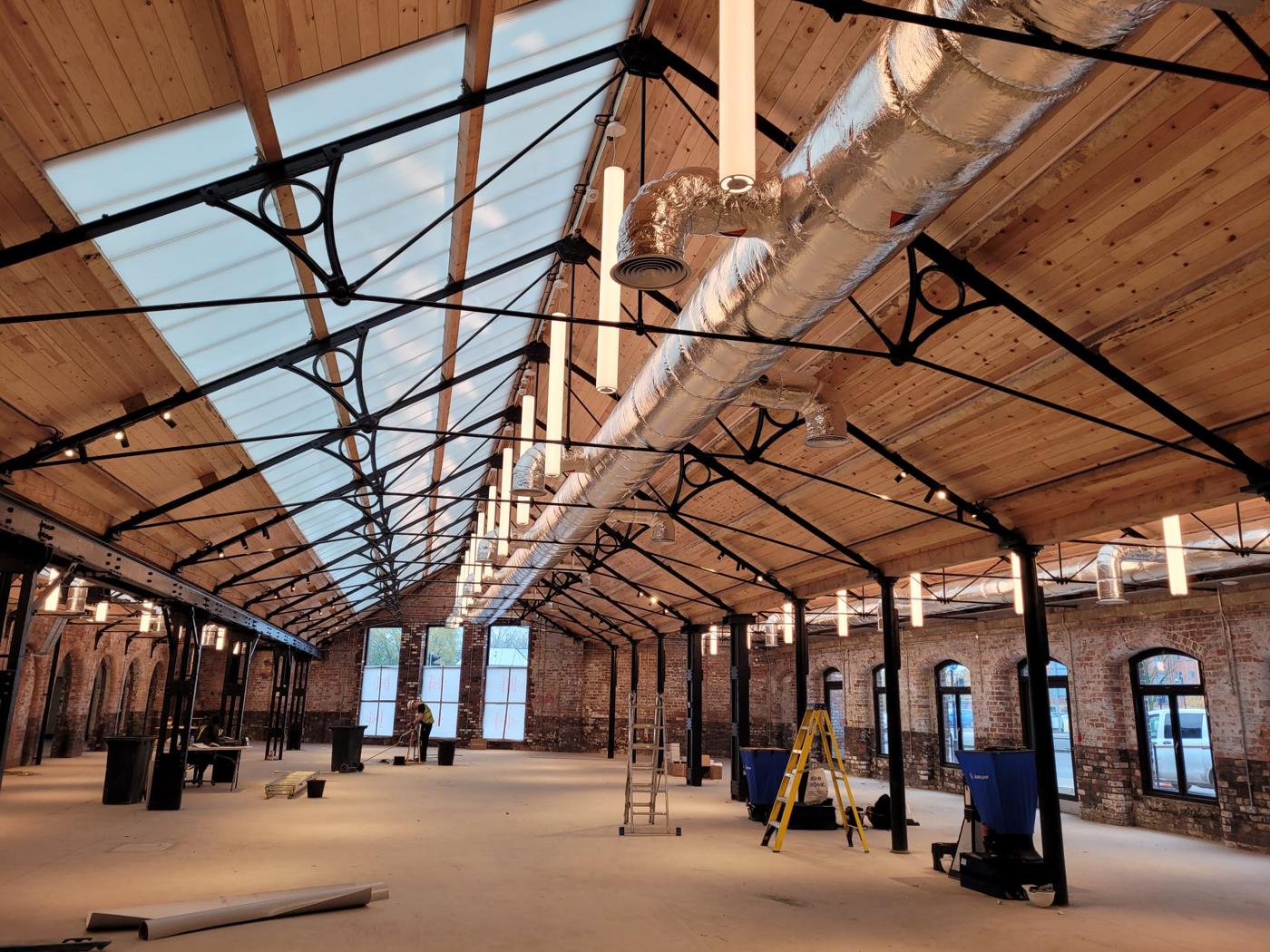
The restoration
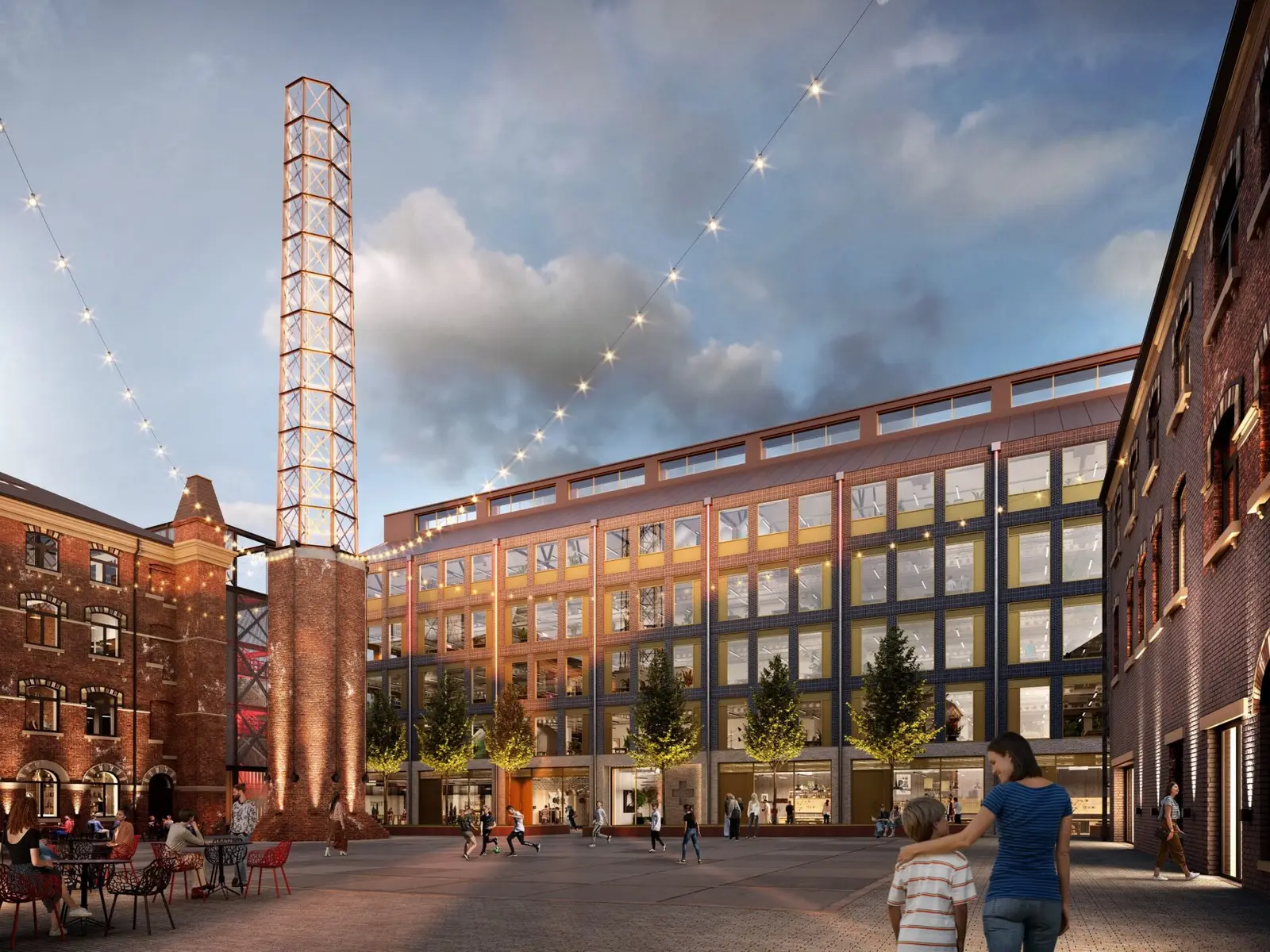
Led by City & Provincial Properties with Tileyard and Wakefield Council, designed by Hawkins\Brown with Civic Engineers, and built by Sewell, Morgan Sindall and Henley. Polychromatic brick arches, jack-arch ceilings, clinker floors and timber roof trusses survive, the Carding Shed's north-light roof has been reinstated, and the chimney rebuilt as a lattice to its original height.

The mills today
Gradient Mill: Grade A offices.
Explore the estate
Cutter Mill: coworking and serviced offices by 2-Work.
Cotton Mill: recording studios.
Corn Mill: Vinyl Cafe North.
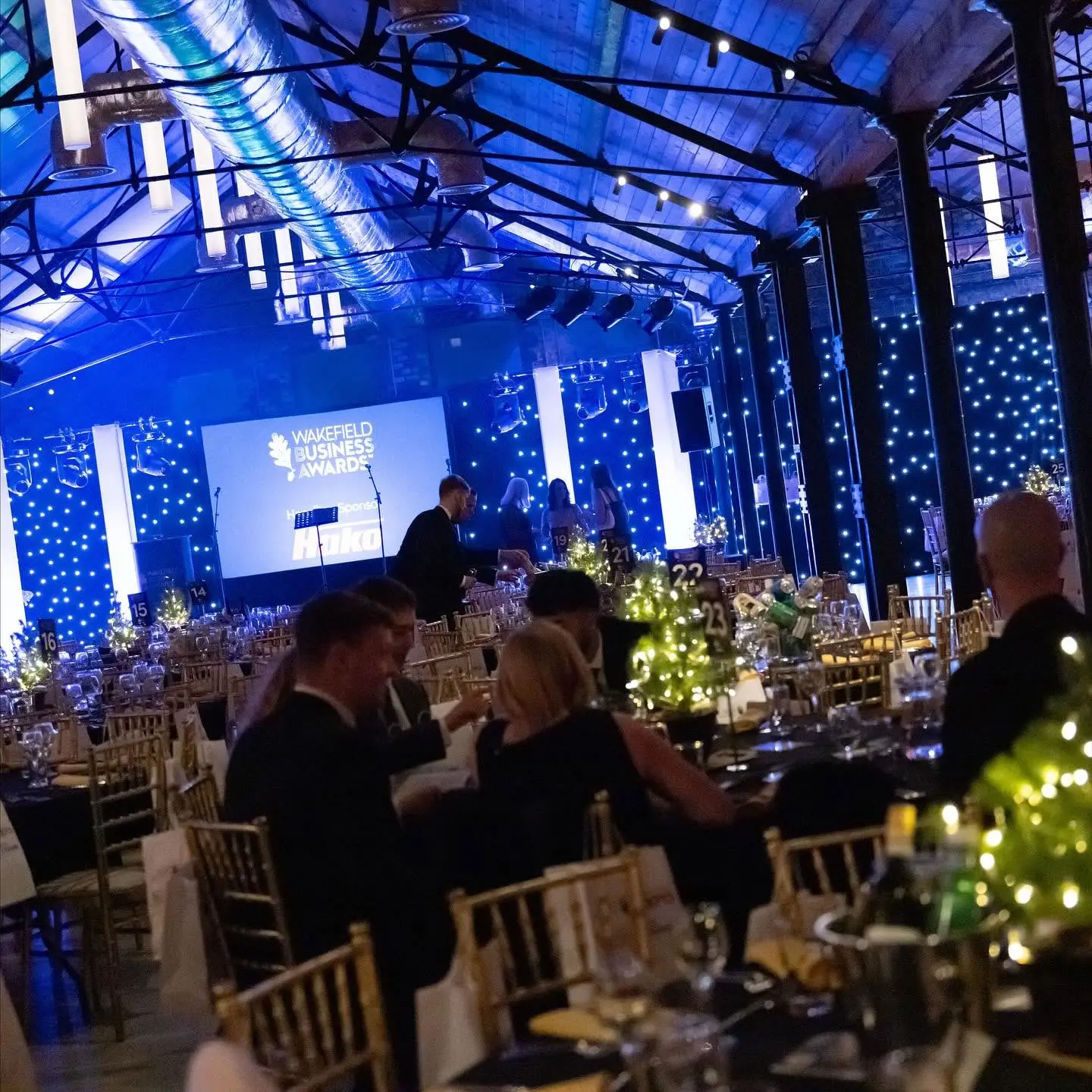
Carding Shed: event space for up to 800.
Phoenix Mill: not yet fitted out inside.

What people say
“After lying derelict for many years, it's wonderful to see that Phoenix Mill is now rising from the ashes.”
“Rutland Mills will be transformational for Wakefield.”